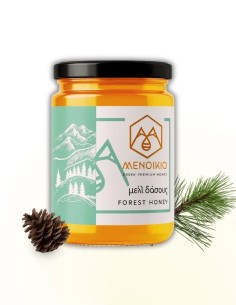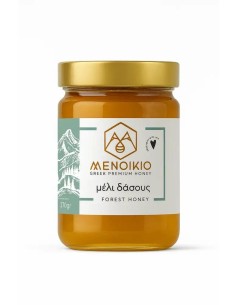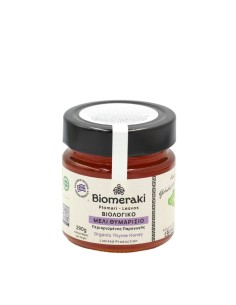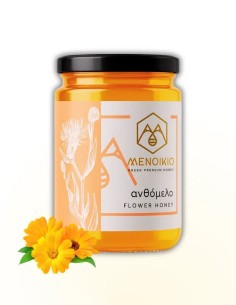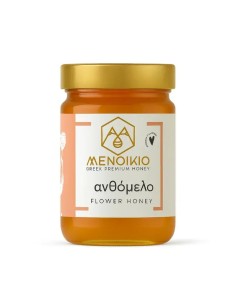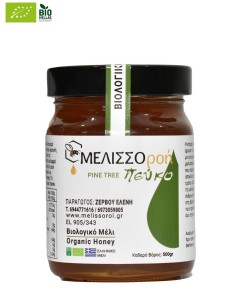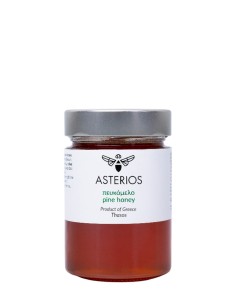
Pine honey Amfipolis
€21.12 kg
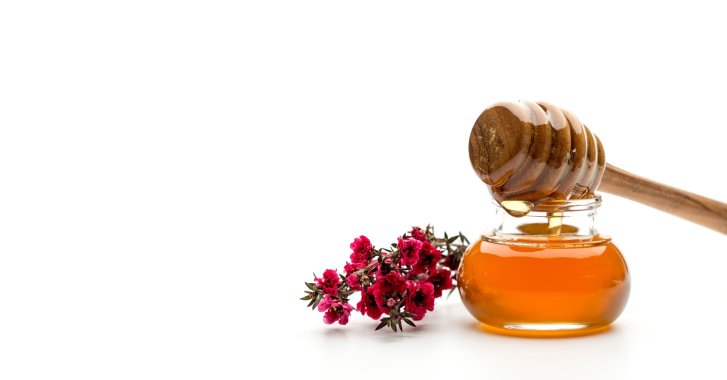
Honey produced by our bees from the nourishment they find on the foothills and peaks of mount Pangaion, within pine forests. A dark, thick honey with golden-yellow hues, a rich taste, and an aromatic profile, it is packed with nutrients, trace elements (potassium, magnesium, phosphorus, iron), and vitamins in small amounts.
Pine Honey - A Refined Delight
Honey produced by our bees from the nourishment they find on the foothills and peaks of mount Pangaion, within pine forests. A dark, thick honey with golden-yellow hues, a rich taste, and an aromatic profile, it is packed with nutrients, trace elements (potassium, magnesium, phosphorus, iron), and vitamins in small amounts. Even this small quantity aids in the better absorption of sugars by the human body. It is an ideal choice for the diet of modern individuals of all ages.
Pine honey It belongs to a special category of honey, mainly derived from honeydew secretions of insects living on coniferous trees. It does not come from flower nectar but from the honeydew produced by insects such as Marchalina hellenica (pine worker insect) and the Physokermes hemicryphus (fir tree insect).
Pine Honey – Key Characteristics:
- 🍃 Color: From dark amber to reddish (fir) or brown (pine).
- 🍃 Taste: Rich and intense, less sweet than flower honey, with notes of nuts or caramel.
- 🍃 Crystallization: Slow crystallization due to low glucose content (remains liquid for a long time).
- 🍃 Moisture: 14-16%, contributing to its long shelf life.
- 🍃 Nutritional Value: High content of trace elements (potassium, calcium, magnesium, phosphorus, iron) and antioxidants.
- 🍃 Antimicrobial Properties: Due to its low sugar content and low pH, it inhibits bacterial growth.
Nutrition Facts (per 100g)
| Nutrient | Value |
|---|---|
| Energy | 1238.6 kJ / 294.9 kcal |
| Fat | 0g |
| of which saturated | 0g |
| Carbohydrates | 58g |
| of which sugars | 58g |
| Dietary fiber | 0g |
| Proteins | 0.7g |
| Salt | 0g |